
Red Flags to lookout for
There was this one time I partnered with a roofing company who already had an SEO agency start working on their SEO. There was an instance where the business owner had me on the phone with the SEO. Now, while this wasn’t a hostile conversation or anything, in fact we were discussing collaborating with this company’s website and content.
The Conversation
During that conversation, I immediately noticed the SEO was dropping a bunch of buzzwords the owner probably didn’t know what it meant.
“Oh yea we’ll optimize the href’s, the H2’s, meta tags and this and that”. So, why was this a red flag for me?
Usually when a person drops buzzwords and technical terms instead of explaining the process in a simple to understand way, it’s a sign they are betting you don’t know much about SEO. You not knowing much about SEO and hear buzzwords you have NO CLUE what they mean – most people’s reaction is “this person knows what they’re doing”. This leads to the prospect being easier to convince…
Over time, few days maybe, I was in contact with this SEO on what I will be helping this company with and how we can collaborate. At this point we were free to talk SEO jargon, so I asked what his plans were. He continued to drop the same buzzwords, told me he did not use any other keyword tracking tool because he believed Google Search Console (GSC) was the best source of truth, and he loosely admitted to using a PBN (Private Blog Network).
So, let’s break this down.
Repeating the same buzzwords even in private tells me that’s the cap of his knowledge. No mention of other known strategies, just the old traditional way of doing SEO.
Believing GSC as the only source of truth is bizarre… GSC picks up random keywords that may not even be relevant to your page, you may not even care about some keywords. There will always be keywords you rank for but GSC isn’t showing you that, THIS is why we manually track keywords with tools like SERanking, SEMRush, Ahrefs and so on.
GSC provides organic data, manual keyword tracking provides controlled data.
When it comes to PBN’s, on paper, Google prohibits the use of PBNs but there are legit ways SEOs can create their own portfolio of high authority domains. This one can be a bit complex, in the sense that we’re skating on thin ice between leveraging your portfolio ethically and Google’s policy on PBN’s.
The Reporting
This one sealed the deal for me.
I asked the SEO to send over a report he says was sent to the owner for last month’s SEO. The contents of the report covered , Clicks and Impressions, Page Speed, Landing Pages, Target Keywords, UI/UX Optimization, and “AIO” (don’t get me started…).
Clicks and Impressions
What struck out to me as extremely suspicious was the site selected was his own domain… The date range for showing the numbers was only 2 days…? And there was no filter for any specific page…?
I think “why” this is suspicious is pretty self evident.
Keyword Research
His keyword research was not technically wrong, but it didn’t make sense. He had mapped a specific set of keywords to each landing page, which is also not wrong. The part that didn’t make sense was these were location pages for specific cities. Traditionally, location pages cover all services offered by the company and when done well, you rank up for all services the location page features.
In this case, he mapped specific services to different pages. One city would only target roofing, another would target garage doors, and there was one that specifically covered shingles?
A page like this can technically rank, but the domain name would be a conflicting factor. There is one big factor that I will mention later on.
AIO SEO
Here is the thing with AIO, which means AI Optimization. Funny, AIO is it’s own acronym but in the report he wrote “AIO SEO” which is “AI Optimization Search Engine Optimization” – go figure. AI Optimization is not a thing… AIO is the idea that you can appear more or “rank up” for AI models like ChatGPT, Copilot, Grok and so on.
The thing is, these AI models are NOT search engines and the CEO of OpenAI blatantly said so himself.
Most AI models learn their information from search engines like Google, Bing and even Brave – hell, even Reddit (Claude). They look for relevant information in the sources they pull and summarize what it found. Do this, ask your favorite AI chat these 2 questions:
- What search engine do you get your information from?
- Tell me the source where you got this answer from
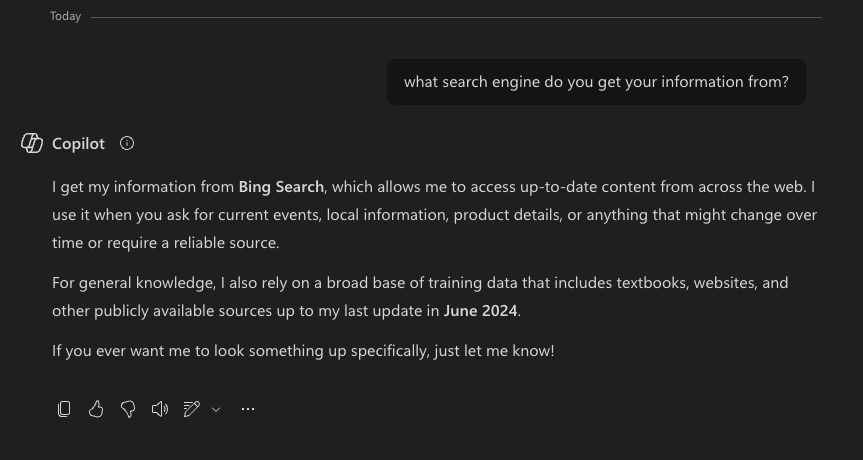
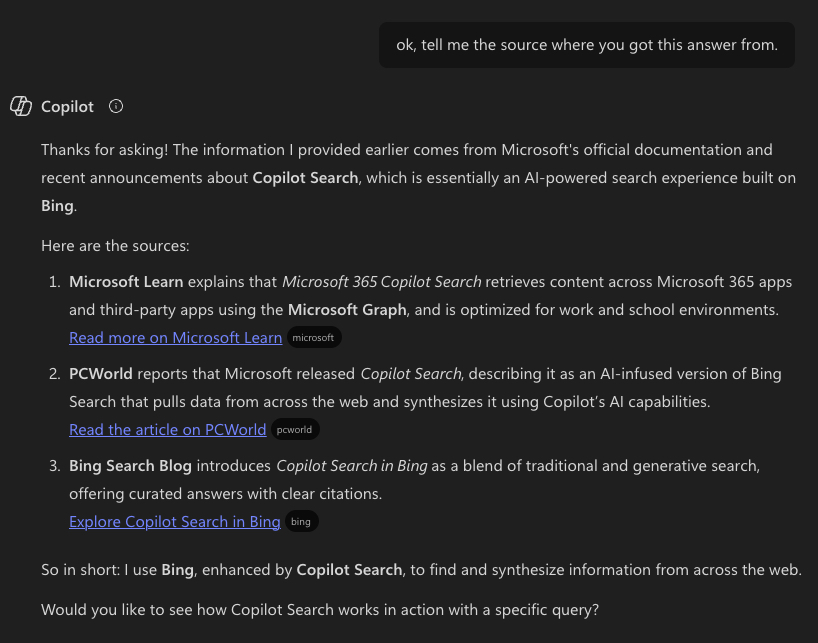
Bottom line. If you want the chance to be sourced by AI, optimize for the search engine they use.
UI/UX Optimization
In the report they claimed they optimized the landing pages for best results. My first question is, how are they optimizing if the page hasn’t been live for more than a few weeks? Scrolling through the page, it looked pretty generic and simple, almost like a template – no real customization.
Eventually, I had the idea of finding their sitemap.xml just to see what it looked like. And to my shock but not surprised, this domain was hosting pretty much every client they have. After clicking several links, I quickly noticed every page was exactly the same. The only difference was of course the content, images and branding.
There was no UI/UX Optimization anywhere… It was clearly just a template.
Actually, we have an important lesson here.
Don’t host the names of your own clients if you don’t want another SEO to discover and target them.
Now, using a template is not wrong by any means. But if you’re going to build landing pages or a website for a client, just be upfront about where the design came from.
Page Speed
The page speed screenshots sent me off a cliff. I can’t tell I, have to show:
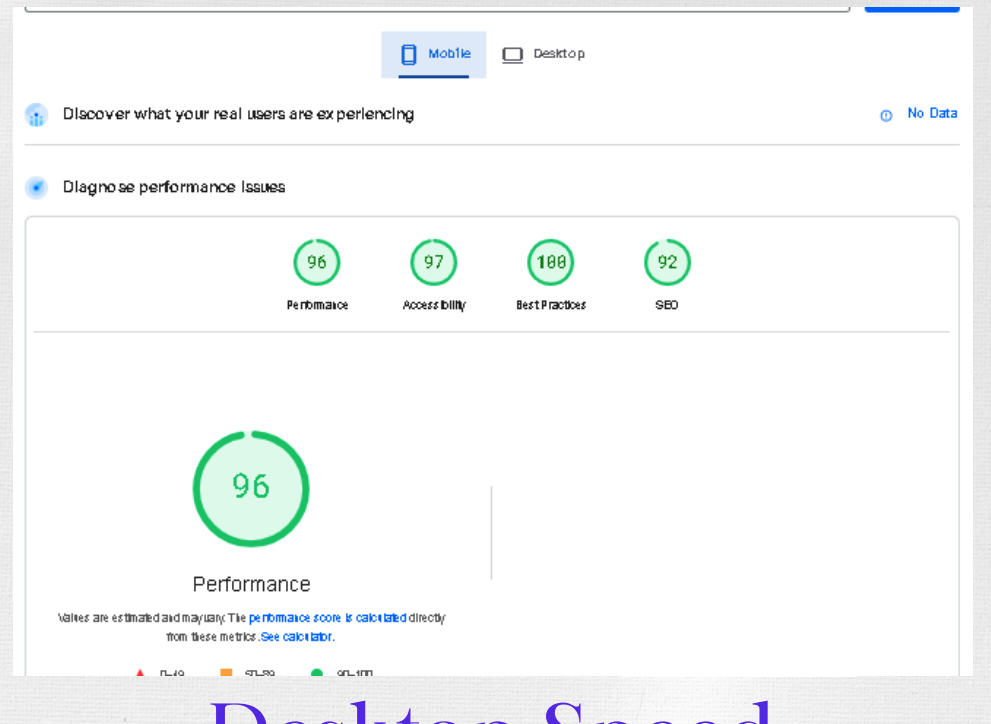
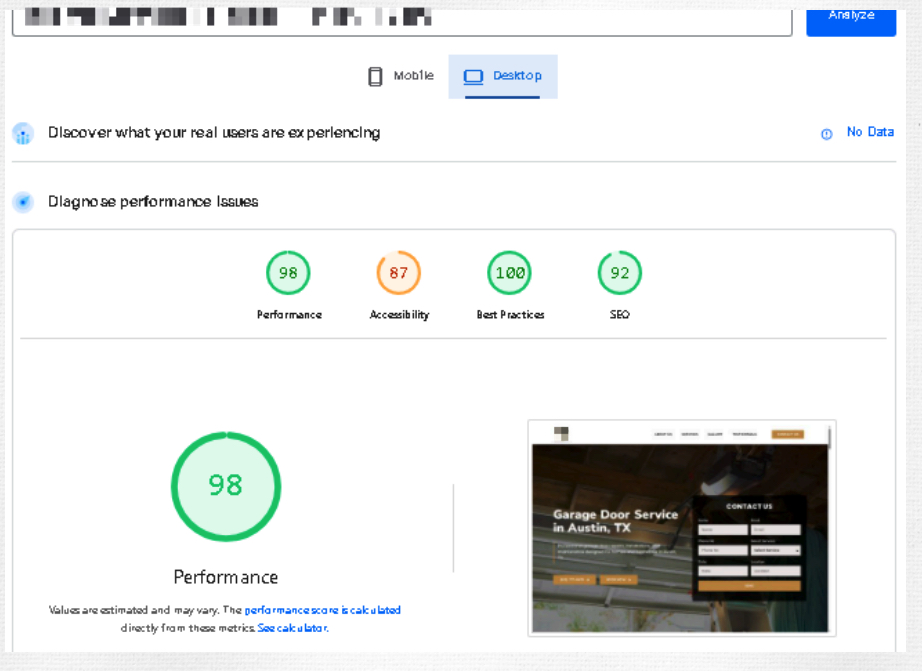
I screenshot around the screenshot so you can see it’s taken from a report – not making this up.
So, what we have here are 2 supposed screenshots of the speed results for the same page. Mobile, interestingly, the preview image is completely white-out. Meanwhile, the Desktop report shows the preview image with a good score? Another thing to note is the URL bar in the Desktop report was visible, but on mobile it’s completely cut out?
If I was showing this to a client, I would screenshot the report but also provide the live link to it – you can do that. These are the signs of someone with something to hide. Again, it’s NOT bad if the score isn’t perfect, it’s our job to make it better. Just be upfront.
Key Takeaways
The best way to tell if a freelancer or agency can be trusted, is to pull teeth. Ask “why?”.
1. Everything you do for SEO, must have a clear vision.
- I’m building a content silo because I’m building topical authority.
- I’m link building because I’m building domain authority.
- I’m building this landing page because we need more sign-ups.
If you’re doing something because “traffic go up”, you’re throwing punches in the dark. As mentioned in What is the goal of SEO?, your SEO needs to be putting effort into attracting the right traffic. Do they have a clear plan?
2. Buzzwords, buzzwords, buzzwords… Lookout for these because they sound good but if they can’t explain what it is and why?
Typical buzzwords I hear throughout the community that I strongly consider snake-oil:
- AEO
- AIO
- LLMO
- SEO is dead
- Guaranteed Rankings
- GEO
- GeoTagging
- LSI Keywords